A Designer's Honest Review of Vintage Calligraphic Dividers
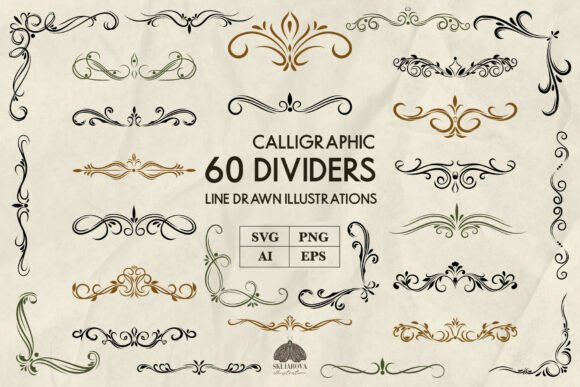
As a designer who uses digital files daily for embroidery projects, I approach every new asset with a practical eye. My first question is always: will this translate well from screen to stitch? When I opened the Vintage Calligraphic Dividers SVG Png set, my immediate impression was one of curated elegance. These aren't generic lines; they feel like hand-drawn flourishes from an old manuscript, each with a distinct personality. The mood is classic, sophisticated, and subtly romantic. They don’t shout; they whisper a detail-oriented craftsmanship that aligns perfectly with high-value handmade goods.
The Right Project for this Kind of Character
Let me paint a real scenario. A client requests a custom embroidered linen pillow cover as a wedding gift. They want something beautiful but not overly floral, with a touch of timeless script-like detail. This is where this set shines. I could select a divider with gentle scrollwork, embroider it along the border of the pillow in a fine satin stitch, and perhaps pair it with the couple's initials. The result wouldn't be a bulky, dense fill stitch design; it would be a delicate, linear accent that elevates the entire piece. This is the natural habitat for these dividers: projects where detail and tasteful embellishment are the goal, not overwhelming coverage.
They feel destined for heirloom-quality items. Think embroidered tea towels for a boutique kitchen line, the elegant border on a baby's christening blanket, or a subtle detail on the cuff of a linen apron for a small shop. For an Etsy seller creating personalized gifts, these elements add a layer of design sophistication that basic text alone cannot achieve. They frame, they separate, they decorate without competing.
Where They Perform Beautifully in Stitched Form
In real-life embroidery, the success of these designs hinges on their clean lines and open areas. On a tote bag, a well-chosen divider stitched along the bottom hem can transform a simple bag into a boutique product. On a sweatshirt, placed delicately near the collar or along a sleeve seam, it offers a modern-vintage vibe. Because the core files are vector-based, scaling is a true advantage. You can enlarge a single element for a bold statement on a pillow cover, or reduce it drastically for a tiny, perfect accent on a cap’s curved surface or a baby item’s small pocket.
For patches, these dividers can create fantastic borders or internal framing for text. In digital product previews or printable mockups for your craft business, they serve as impeccable design assets that make your listings look professional and cohesive. Their vintage calligraphic style builds a visual theme, aiding brand consistency across your embroidered goods and digital storefront.
Practical Considerations for the Embroidery Process
Their visual personality is clear, but how do they stitch out? The hand-drawn nature means some dividers have fine details and small corners. This requires attention during machine embroidery setup. Always, always test the specific design you choose on scrap fabric first. This allows you to review stitch density for those thinner lines and inspect how tiny details like scroll ends translate. A running stitch might be preferable to a thick satin stitch for the finest lines to maintain clarity.
Thread color contrast is paramount. On dark fabric, a light thread will make these elegant lines pop; on light fabric, a dark or metallic thread can create stunning definition. Because many elements are open, stitch density shouldn't be a major issue, preventing overly stiff results on stretchy fabrics or lightweight apparel. However, using a proper stabilizer is still crucial to keep those clean lines clean on any garment.
Where to Apply a Careful, Designer's Eye
While versatile, these dividers demand smart application. On very small hoop sizes, the most intricate designs might lose definition—choose the simpler, more open elements. On textured fabrics like thick sweaters, the fine details could get lost; they perform best on smooth, tight-weave cottons, linens, or stable canvas for tote bags.
I would avoid using the most complex dividers on areas that need frequent, aggressive washing, like everyday kitchen towels, as the repeated stress could affect fine stitching. For curved surfaces like caps, select a design with a flow that complements the curve, and scale it appropriately. Always check how the design looks in black and white mockups against both light and dark backgrounds to judge its inherent strength before committing thread.
Most importantly, this set is labeled as illustrations and graphics. As an embroidery designer using these for commercial projects, you must confirm the licensing terms yourself before selling finished embroidered items or derived digital products. The file formats provided are standard for design software, but ensure your embroidery software can import the chosen format (like SVG or PNG) cleanly for digitizing or direct use.
How This Design Affects Your Finished Product's Appeal
Using a design with this inherent character does more than decorate a product; it elevates its perceived value. On a handmade presentation, it signals thoughtfulness and design intent. For a customer, it feels special, less generic, and more giftable. It engages a buyer looking for something uniquely crafted, not mass-produced. For your craft business, consistently using such tasteful assets builds customer trust in your design sensibility.
In the end, the Vintage Calligraphic Dividers SVG Png set offers a toolkit of elegance. Its real power for embroidery designers isn't in quantity, but in quality of style. It provides those subtle, framing touches that make a custom embroidered piece feel complete, considered, and professionally designed. It’s for the maker who understands that sometimes, the quiet details speak the loudest.
Your Next Steps as a Practical Maker
- Download the set and browse the 60 dividers in your design software.
- Select a few that match a current project's mood and scale them to your intended hoop size.
- Create simple stitch path tests on scrap fabric with your chosen thread colors.
- Evaluate the stitch-out for clarity, especially on small details and corners.
- Confirm the licensing for your intended use, whether personal gifts or commercial merchandise.
- Imagine them not just as graphics, but as stitched texture on your specific product—a tote bag, a sweatshirt, a holiday gift pillow.
Approach them as a designer would: as elegant, functional assets waiting to be translated into thread. Your embroidery project will thank you for the considered detail.