The Party Dress: A Continuous Line Embroidery Design Review
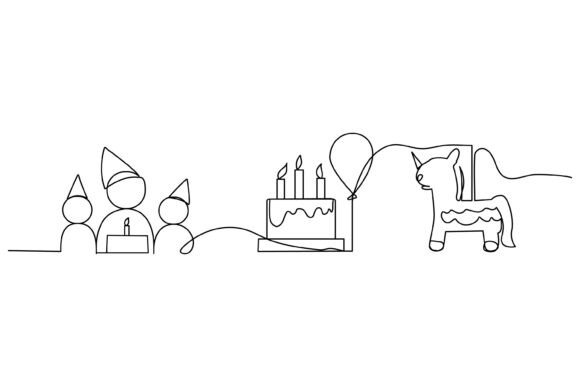
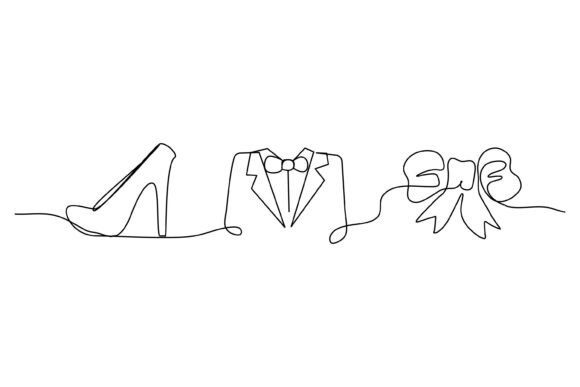
Let’s be honest—when you see a product titled Continuous Line Clothes for Parties, your mind probably jumps to a few specific things: a sleek, graphic dress silhouette, a sense of whimsical celebration, and that beautiful simplicity that only a single, unbroken line can create. As someone who stitches designs onto real products every week, my first thought wasn't just about the file itself, but about what it becomes when thread meets fabric. This isn't just an illustration; it's a potential centerpiece for a handmade product.
The Immediate Mood: Elegant Simplicity for a Handmade Feel
Opening this design, the immediate impression is one of clean, celebratory elegance. The single continuous line forming a dress shape isn't overly detailed, but it's confidently drawn. It evokes a sense of occasion—a party, a wedding, a special date—without being loud or kitschy. This visual personality is its biggest strength. It feels modern, slightly nostalgic, and incredibly versatile. For embroidery, this means it doesn't shout; it whispers with style, which often translates to a more sophisticated finished product.
In my world, a design like this naturally belongs on items where that whisper is valuable. Imagine it stitched onto the corner of a linen pillow cover for a bride-to-be, or on a cotton tote bag as a gift for a friend hosting a dinner party. It’s not a design for a loud, graphic t-shirt; it’s for products where the embroidery is a thoughtful accent, not the entire statement.
Real-Life Embroidery Performance: Where It Shines and Where to Tread Carefully
So, where does Continuous Line Clothes for Parties perform brilliantly? On stable, smooth fabrics where that single line can shine. A crisp satin stitch on a cotton apron for a boutique kitchen brand? Perfect. A running stitch outline on a canvas tote bag for a craft fair? Excellent. It would make a beautiful, subtle addition to a baby’s linen blanket as a personalized gift, suggesting celebration without overwhelming the delicate fabric.
For small business merchandise, like a series of embroidered tea towels or simple pillow covers for an Etsy shop, this design adds value through its aesthetic clarity. It looks professional, not homemade in a clumsy way. It enhances the handmade presentation by being intentionally minimalist.
However, the "continuous line" aspect requires some practical caution. On highly textured fabrics, like a nappy sweatshirt, that single line might get lost or look broken. On dark fabrics, unless you're using a very high-contrast thread, the elegant simplicity can fade into obscurity. This design would be challenging on curved surfaces like caps unless carefully hooped and stabilized, as small details on a curve can distort.
The lack of dense fill areas is a blessing for stitch density and fabric integrity, especially on thinner materials like silks or light cotton for blouses. But it also means every millimeter of that line needs to be clean. Any wobble in the stitching will be noticeable. This isn't a design you can stitch quickly without attention; it demands precision.
A Practical Scenario: The Embroidered Gift Tote
Picture this: a client requests a custom gift for a friend’s birthday. They want a natural canvas tote bag with a simple, chic embroidered motif. You load Continuous Line Clothes for Parties. You choose a single thread color—a deep burgundy or a soft gold. You test it on scrap canvas first, adjusting the hoop size to ensure the line flows smoothly without puckering. The final result is a bag that feels special, thoughtfully crafted, and uniquely personal. The customer’s reaction isn't, "Wow, huge embroidery!" It's, "That's so beautifully subtle and perfect." That’s the engagement this design fosters.
Affecting Value, Trust, and Professionalism
Using a design with this clear graphic appeal directly impacts how customers perceive your work. For a crafter or small shop owner, it signals good taste. It helps build brand consistency if your style leans toward minimalist, modern gifts. Its giftability is high because it’s universally understood and feels intentionally crafted, not randomly selected.
For commercial embroidery projects, like a small run of patches for a boutique’s packaging or branded aprons, it offers a recognizable, clean asset that doesn’t require complex color changes or excessive stitching time, keeping costs manageable while maintaining a premium look.
Essential Designer Notes Before You Stitch
Before you commit this design to a final product, here’s my practical checklist from the embroidery machine side:
- Always test on scrap fabric first. Use the same material you plan for the final project. See how that single line behaves.
- Check thread color contrast rigorously. On white or light backgrounds, most colors will work. On mid-tones or dark fabrics, you might need a bright or metallic thread to preserve the design’s visibility.
- Review the stitch path in your software. Since it’s a continuous line, look for any tiny jumps or corners that might cause hiccups in the stitching sequence.
- Confirm your hoop size is appropriate. The design likely has a natural scale. Don’t try to shrink it too small for a tiny baby item; the line might become fragile. Don’t enlarge it too much for a pillow where a single line could look sparse.
- Use proper stabilizer. Even for a simple line, stabilizer is crucial to prevent distortion, especially on stretchy apparel or towels.
- Test it in black and white mockups. This helps visualize it on both light and dark fabric backgrounds before you stitch.
- Crucially, confirm the licensing. The product comes as EPS, SVG, and JPG. These are graphics files. You need to understand the license terms before using this design for commercial embroidery projects or selling finished items. Is it for personal use only? Commercial use? Royalty-free? Don’t assume—check.
Remember, this Continuous Line Clothes for Parties design is, at its core, a graphic illustration translated into an embroidery file. Its success on a sweatshirt, a baby blanket, or a market tote depends entirely on your skill in pairing it with the right fabric, thread, and intention. It’s a wonderful, mood-setting tool for your embroidery project toolkit, but like any precise tool, it requires a thoughtful hand to unlock its best potential.