Crafting with a Single Line Portrait Graphic
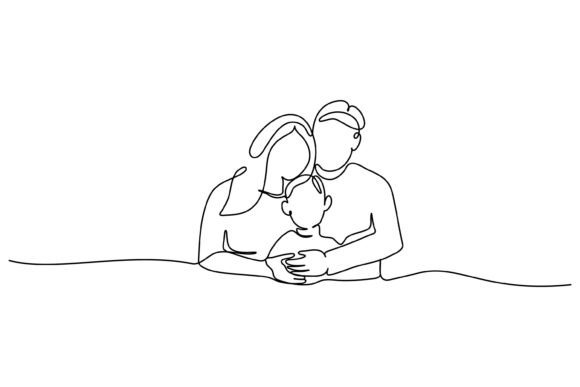
Opening the Continuous Line Design of Portrait file, my first thought is how cozy and intimate it feels. This illustration of a father and mother hugging a toddler, created with a single unbroken line, isn't loud or flashy. It’s quiet, tender, and deeply personal. It speaks to a customer looking for something meaningful, not just decorative. This graphic design asset has a premium, minimalist elegance that suggests a handmade product made with care.
The Mood It Creates for Your Handmade Brand
This style leans towards a modern, heartfelt aesthetic. It feels less “cute” and more “emotionally resonant.” I imagine it appealing to customers celebrating family, parenthood, or a cherished moment. In my own shop, I’d use it for products aimed at gifts—a Mother’s Day mug, a Father’s Day card, a “new grandparents” celebration. Its single-line execution gives it a clean, artistic look that elevates simple items like a tote bag or a set of gift tags into something special.
Putting This Illustration into Real Crafting Work
Right now, I’m picturing a batch of custom sublimation mugs for a local craft fair. The Continuous Line Design of Portrait is perfect for this. The SVG design means my software can read it cleanly, and the single line translates beautifully into a crisp print. But its uses go far beyond mugs.
For Cricut projects and Silhouette projects, this is a dream for vinyl. The continuous line creates a single, manageable cut path, ideal for applying to t-shirts, tumbler wraps, or wooden signs. For sticker design, it’s a standout element—especially if you pair it with a simple script font for a family name or date. I’d also use it for:
- Printable designs like wall art or planner pages.
- Decorative accents on handmade greeting cards and scrapbooking.
- Handmade packaging and thank-you cards to reinforce a small business branding theme of family and connection.
- Product mockups for a Etsy product line focused on personalized gifts.
Where This Graphic Shines in Your Product Line
This asset works best when it’s given space to be the focal point. Think large cut files on a tote bag, a clean, centered printable design on a birth announcement, or as a decorative accent on a minimalist wedding favor. It’s ideal for seasonal craft bundles around holidays like Christmas or Thanksgiving, where family themes are strong. It’s also a prime candidate for personalized items—adding a name or location underneath the portrait creates a unique, high-value product.
Practical Considerations for a Smooth Project
While the design is beautiful, a crafter’s job is to test before committing to a customer order. Here’s my real-world checklist:
- Always test the file before selling finished products. Run a small Cricut project with scrap vinyl to see how the single line cuts and weeds.
- Check that the SVG lines are clean and connected in your design software. A broken path can ruin a cut.
- For printable designs, confirm the JPG resolution is high enough for sublimation or quality prints.
- Test how it looks on both white and dark backgrounds. That single white-background line may need a subtle offset or background fill on a dark shirt.
- Resize it for different products. It might lose its elegance if shrunk too small for a sticker design.
- Pair it with typography wisely. A delicate script font complements its flow, while a clean sans serif font keeps it modern.
- And absolutely, confirm the commercial licensing if you’re using it for handmade business products sold on Etsy, at a craft fair, or through print-on-demand services.
When to Use This Asset with Extra Care
The nature of a single-line illustration means there are areas where you need to be cautious. The “hugging” detail, while lovely, involves overlapping lines. In very small cutting details, like a tiny charm or a mini sticker, those overlaps might not cut cleanly and could become fragile. Avoid using it in crowded compositions where its simplicity gets lost. Also, because it’s a line drawing on a white background, using it on low-contrast colors (like a pastel substrate) might reduce its visibility. For layered vinyl projects, this isn’t the best fit—it’s designed to be one cohesive piece.
Integrating It Into Your Creative Workflow
For my next craft fair preparation, I see this Continuous Line Design of Portrait as a core piece in a “Family Love” collection. I’d create a matching set: mugs with the portrait, tote bags with a simplified version, and gift tags with just a portion of the line work. Having the EPS, SVG, and JPG formats means I can switch between digital printing, vinyl cutting, and printable product creation seamlessly. It’s more than clipart; it’s a versatile design asset that can anchor a whole product line.
Ultimately, this illustration’s value is in the emotion it conveys and the craft-ready quality of its files. It saves me hours of drawing time and provides a professional base for my handmade business. By understanding its strengths—and its technical needs—I can turn this beautiful graphic into real products that resonate with customers and support my small business branding for years to come.